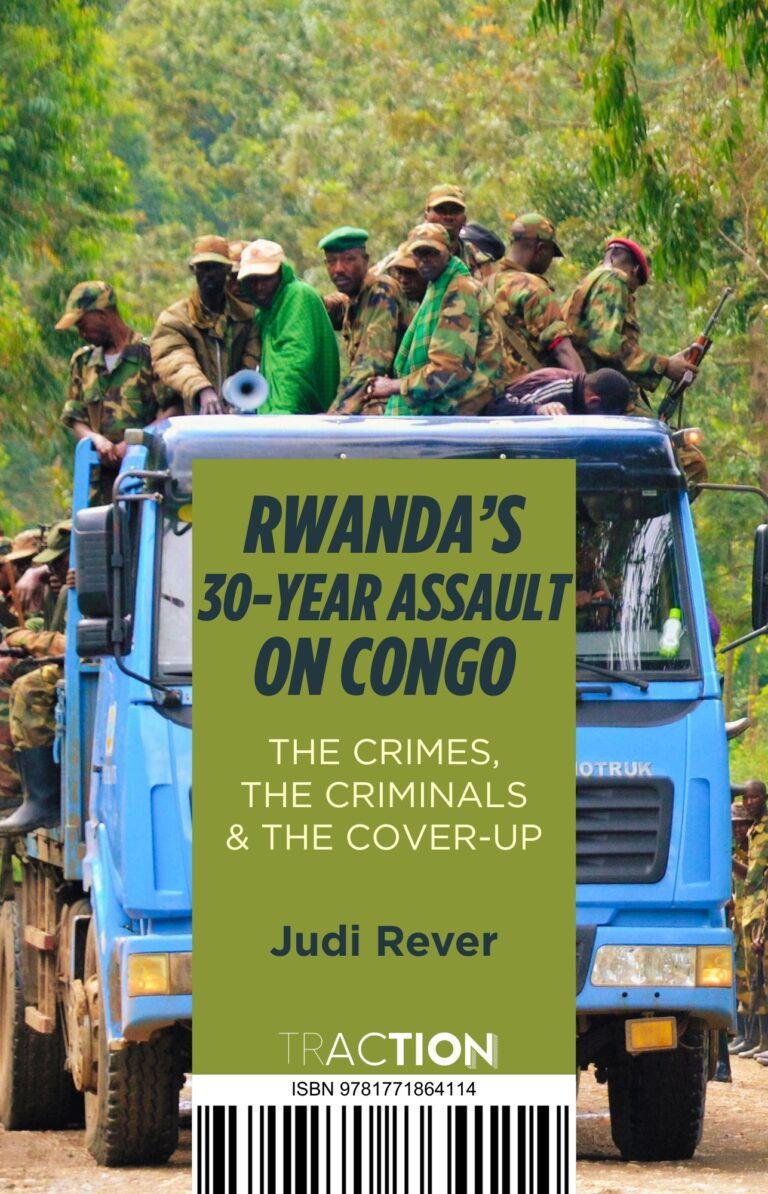
There is a particular kind of silence that powerful governments cultivate around their worst crimes - not the silence of ignorance, but of deliberate erasure. Judi Rever has spent three decades refusing that silence. With Rwanda’s 30-Year Assault on Congo, her follow-up to the award-winning In Praise of Blood, she delivers what may be her most urgent work yet: a tight, forensically argued account of how the United States enabled Paul Kagame to wage a generation-long war of conquest on the Democratic Republic of Congo, and how the international community - its courts, its donors, its diplomats, helped him get away with it. In an era when Rwanda is still praised in development circles and Kagame is still received in Western capitals, the book reads less like history than like an indictment that nobody has had the courage to file.
The book’s opening premise is unsparing. When Kagame’s Rwandan Patriotic Army swept westward through Congo in 1996, it did not march alone. Rever marshals a formidable body of evidence, US congressional testimony, declassified military documents, on-the-record interviews with senior American diplomats and intelligence officials, to establish that Washington didn’t merely look away. It provided satellite tracking data to locate Hutu refugees in the jungle. It deployed AC-130 gunships, P-3 Orion surveillance planes, and a national intelligence support team drawing on the CIA, the NSA, and the Defense Intelligence Agency. It sent Special Forces from Fort Bragg to train Rwandan troops in counter-insurgency and, in the words of one witness who testified before Congress, in “surgical strikes” into eastern Congo. The operation even had a name: Operation Guardian Assistance. Ostensibly humanitarian. Functionally lethal.
The figure at the center of Rever’s opening chapter - Robert Houdek, the senior US official on the ground in Kisangani as Kagame’s forces massacred refugees at Biaro and Kasese, is a masterclass in the banality of complicity. A former CIA-linked diplomat who served under Henry Kissinger and later became the national intelligence officer for Africa on the US National Intelligence Council, Houdek told Rever when she reached him in 2025 that he had seen “no evidence” of mass killings. Rever dismantles this claim with patience and precision: humanitarian agencies were sounding alarms in public briefings, the UN High Commissioner for Refugees Sadako Ogata had visited the camps, and EU Commissioner Emma Bonino had personally witnessed hundreds of thousands of refugees in deplorable conditions across Tingi-Tingi, Shabunda, and Amisi. Between 400,000 and 500,000 Hutus and displaced Congolese were still in Congo’s forests, being stalked and killed. Houdek was simply there, it seems, to ensure the machinery ran smoothly and the paperwork stayed clean.
What Rever adds to the existing literature, crucially, is the sustained economic argument that runs like a spine through the book. Congo’s natural resources, she argues, are not a side-effect of the conflict; they are its purpose. The mineral-rich eastern provinces of Kivu and Ituri have been systematically stripped through a structure that Kagame’s intelligence apparatus called the “Congo Desk,” run by figures like Jack Nziza and the late Patrick Karegeya. Under this system, Rwanda transformed itself into the world’s largest exporter of coltan despite having negligible domestic reserves. Tantalum, derived from coltan and essential for smartphones, spacecraft, and military equipment, became Rwanda’s bonanza: its price skyrocketed from $65 per kilogram in late 1999 to a peak of $530 by late 2000, with up to 70 percent of what was exported from Congo mined under direct Rwandan military surveillance. By 2025, as M23 expanded control of mining areas in North and South Kivu, tantalum exports from Rwanda surged by 213 percent annually. The phones in our pockets, Rever reminds us without sentimentality, are built on this plunder, and our demand for them has guaranteed Kagame’s criminal longevity.
The chapter titled “A War of Lies” is the book’s most explosive. Here Rever catalogs a series of false flag operations: attacks that Kagame’s forces staged against their own civilians in northwestern Rwanda to manufacture the pretext of a Hutu insurgency and justify the invasion of Congo. These include the 1996 killing of a Hutu mayor and civilians in Rushashi and Tare, the 1997 murder of schoolchildren at Nyange, the massacre of seventeen schoolgirls and a Belgian nun at Muramba, and the coordinated killings of UN observers, Spanish aid workers, and a Québécois priest, all falsely attributed to Hutu infiltrators from Congo. A sworn witness, a former RPA intelligence officer, testified at the International Criminal Tribunal for Rwanda that these attacks had been explicitly discussed by Kagame, James Kabarebe, and Colonel William Bagire in March 1996, with the specific purpose of blaming Hutu insurgents and building a casus belli for war. This is not speculation. This is documented. Yet the international community largely accepted Kagame’s framing, and in some cases actively propagated it.
Rever is equally cutting on the myth that Rwanda’s wars in Congo have been waged to protect the Banyamulenge, the Tutsi community of eastern Congo whose leaders have periodically allied with Kigali. She traces how the Banyamulenge were used as a political alibi for the 1996 invasion, trained at Gako in Rwanda in the years prior, and then abandoned or actively attacked when they tried to assert independence from Kagame’s authority. Congo was always Rwanda’s war, she insists the Banyamulenge were simply useful cover. This pattern of instrumentalizing minority communities while claiming to protect them is one Rever has documented before, but seeing it laid out again in this compressed form underscores just how durable and cynical the deception has been.
The book’s final chapter,
“Requiem for Justice,”
is its most devastating. An anonymous ICC investigator tells Rever that the court’s prosecutor Luis Moreno-Ocampo adopted a deliberate “hands-off policy” toward Rwanda’s most important clients, driven partly by physical fear of Kagame and partly by pressure from South Africa’s resource interests in Congo. Moreno-Ocampo even travelled to Kigali and personally asked Kagame to hand over Bosco Ntaganda and when Kagame refused, the prosecutor did not object. The International Criminal Tribunal for Rwanda, Rever shows, had indictments prepared against Kagame and senior commanders under chief prosecutor Carla Del Ponte. Del Ponte was then fired and replaced by Hassan Jallow, selected specifically, the investigator asserts, on the basis of his agreement not to pursue RPF personnel. Every institutional mechanism that should have stopped Kagame was instead made to serve him. The court that history will remember for prosecuting the Rwandan genocide prosecuted only one side of it.
Where the book is most powerful, it is also most personal. Rever is not a detached scholar. She has chased this story from Kisangani to Kigali for thirty years, interviewing former RPF foot soldiers who dug up corpses with their bare hands, rape survivors whose testimonies are almost unbearable to read, and retired US ambassadors who still insist, with remarkable composure, that they knew nothing and did nothing wrong. That tension - between the overwhelming documented evidence she presents and the stonewalling she records - gives the book its moral charge. This is investigative journalism at its most necessary: not just reporting what happened, but forcing a reckoning with who allowed it to happen and why.
If there is a limitation, it lies in scope. At 106 pages, the book necessarily compresses a story that could fill volumes. Readers coming to this history for the first time may find the density of names, military operations, and institutional acronyms demanding to absorb without prior context. And while Rever is meticulous with primary sources, the book does not deeply engage with competing scholarly interpretations of the 1994 genocide and its aftermath - an omission that may invite dismissal from those already hostile to her thesis. But that is a minor complaint about what is, in essence, a prosecutorial brief - one written for the court of public opinion, since the actual courts have conspicuously failed.
Rever’s closing argument is not one of despair. She points to universal jurisdiction laws in Europe, Canada, and the United States under which corporations and individuals can be held criminally liable for complicity in war crimes and crimes against humanity. Congolese victims, she argues, along with civil society and human rights lawyers, should pursue damages from the corporate entities and business people who profited directly from Kagame’s exploitation of the Kivus. The landmark Swedish criminal case against a multinational accused of war crimes in South Sudan is cited as a model. This is not wishful thinking; it is a roadmap, and Rever names the legal architecture clearly enough for someone to use it.
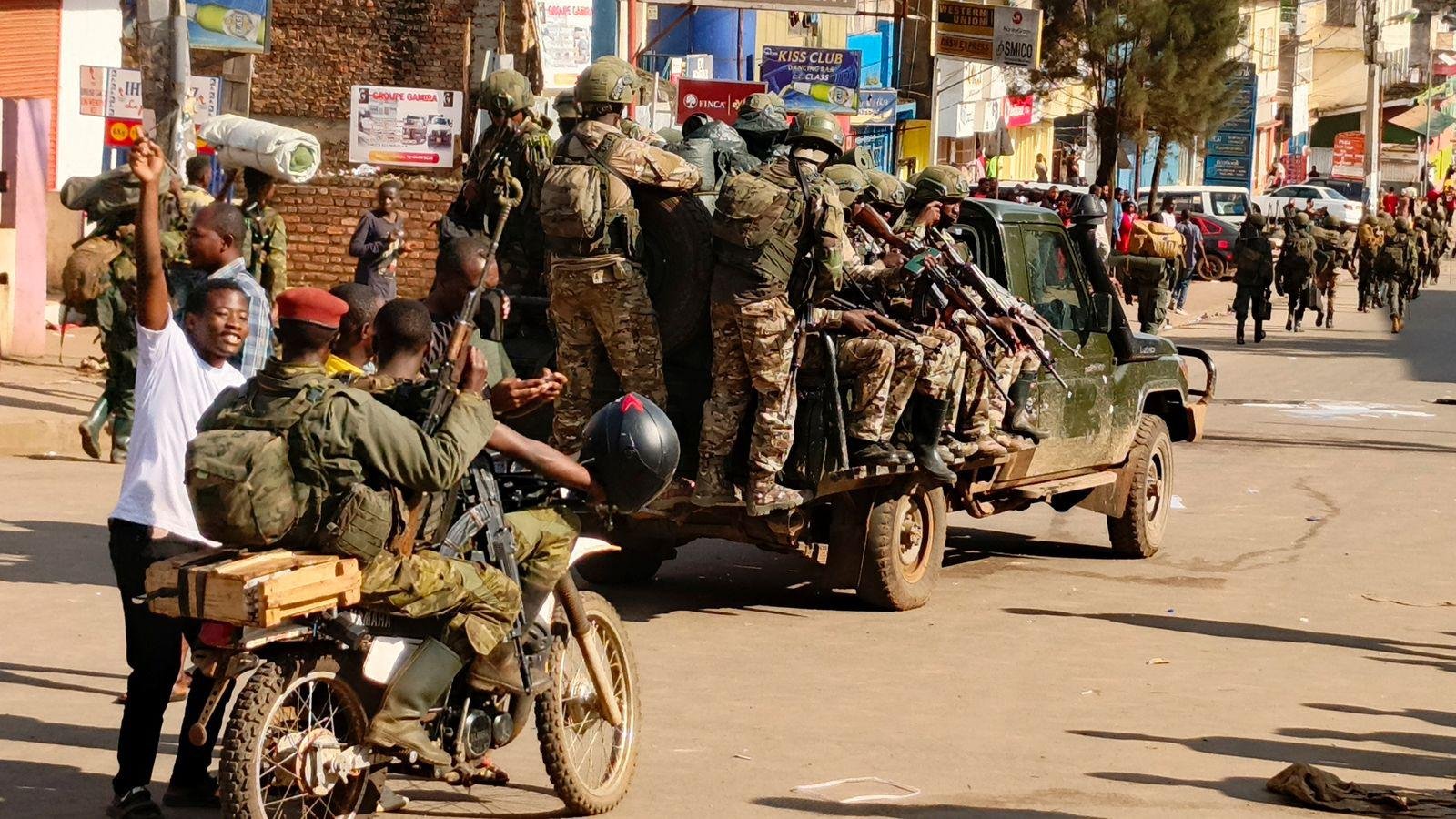
As Kagame’s M23 controls more Congolese territory than at any point in the past decade, as the Trump administration seeks to broker minerals deal that would effectively legitimize Rwanda as an export hub for Congolese resources, and as Western governments continue trading with Rwanda’s supply chain while mouthing concern about humanitarian conditions, this book arrives at precisely the right moment. The silence that powerful governments cultivate is always vulnerable to one thing: a record that refuses to disappear. Rever has been building that record for thirty years.
History, she writes, will cast shame on the international courts and their Western enablers for giving Paul Kagame the means to wage his 30-year rampage on Congo. Rwanda’s 30-Year Assault on Congo is written to make sure history has the evidence it needs.